

Fall may be the most festive season in Ann Arbor.
When colder weather arrives in Ann Arbor, our homes have to work a little harder. The heat comes on, windows stay closed, coats and shoes collect near the door, and shorter days make lighting more important. This is a good time for a simple indoor reset—not a major renovation, just a few manageable projects that can make your home cleaner, safer, and more enjoyable through fall and winter.
1. Give Your Indoor Air a Fresh Start
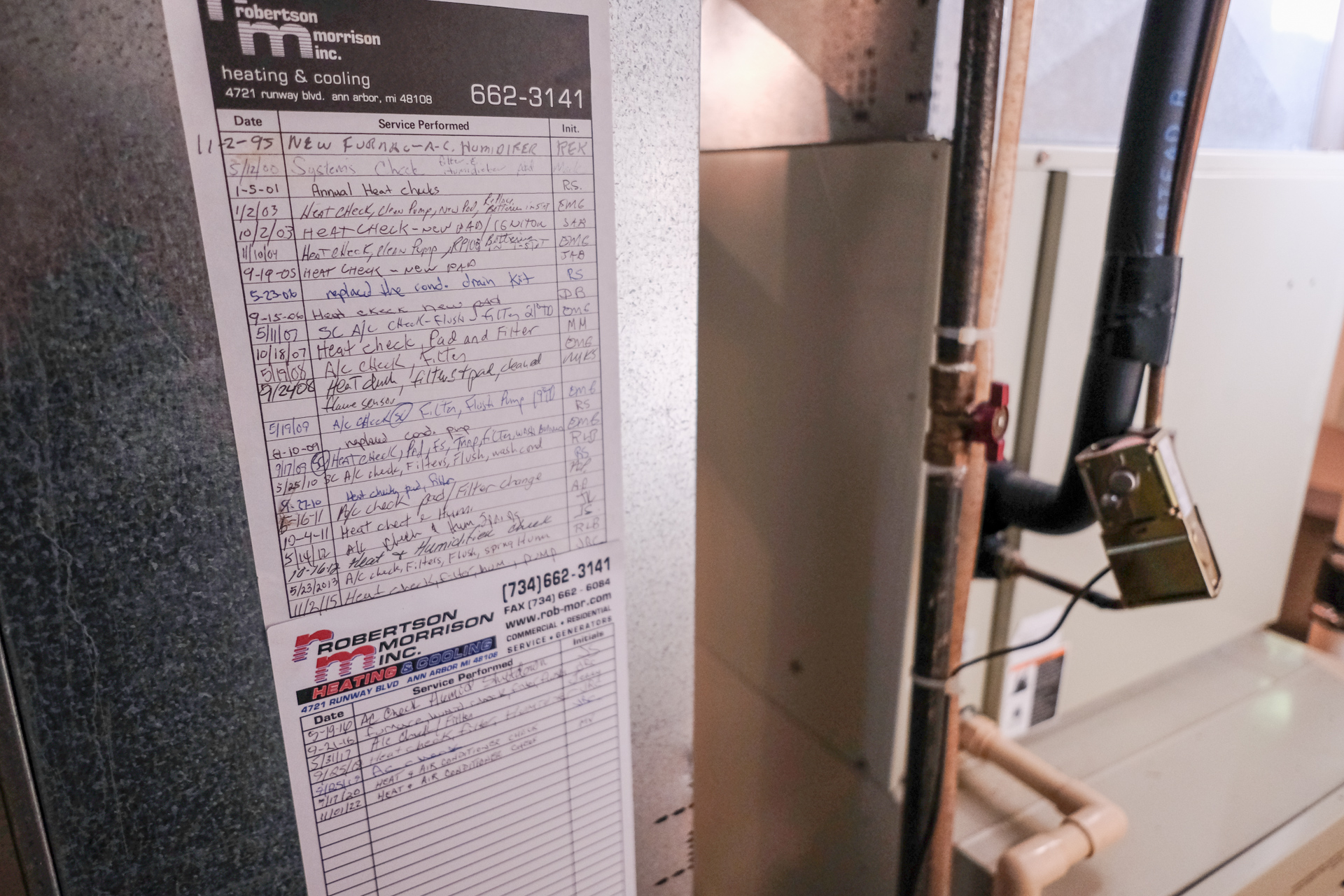
A carefully detailed log of furnace maintenance shows that the homeowner has taken good care of the home’s heating system.
Once the furnace begins running regularly, dust and other particles that settled during the warmer months can circulate through the house. Start by checking the furnace or HVAC filter and replace it if it is dirty or due according to the manufacturer’s schedule. Vacuum the return-air grilles and supply registers, and make sure furniture, rugs, or curtains are not blocking airflow.
Use kitchen and bathroom exhaust fans when cooking or creating moisture, and open a window briefly on mild days when outdoor air quality is good. If you use a humidifier, clean it before the season and monitor indoor humidity rather than simply turning it up. The U.S. Environmental Protection Agency recommends source control, ventilation, and filtration as the basic approaches to better indoor air.
For a more detailed winter checklist, see our seven tips to improve indoor air quality, along with the EPA’s guide to protecting indoor air quality at home.
- Check or replace the furnace filter.
- Vacuum vents and return-air grilles.
- Clean humidifiers and exhaust-fan covers.
- Keep supply and return vents unobstructed.
2. Clean the Places That Affect Everyday Comfort
A whole-house deep cleaning can feel overwhelming, so concentrate on the places you notice every day. Wash throw blankets and removable pillow covers, vacuum upholstered furniture, and clean the dust that collects behind or beneath the pieces you use most. Wipe baseboards and windowsills in the main living areas and bedrooms.
This is also a useful time to clean ceiling-fan blades and reverse the fan direction if appropriate for your model. In colder weather, a ceiling fan running slowly in the winter setting can help redistribute warm air that has collected near the ceiling. Small jobs like these often make a room feel fresher without buying anything new.
3. Make the Entryway Ready for Wet Shoes and Winter Gear
Fall clutter often begins at the door. Decide where wet shoes, umbrellas, coats, gloves, bags, and pet supplies will go before snow and road salt arrive. A washable mat inside the door, a boot tray, sturdy hooks, and one basket for each person can keep the mess contained.
Remove out-of-season items instead of forcing everything into the same space. If the entry feels crowded, look for tripping hazards and make sure the walking path is well lit. A calmer, more useful entry makes arriving home feel better and keeps dirt and moisture from traveling through the house.
4. Use Better Lighting for Shorter Days
When daylight fades earlier, one overhead fixture rarely makes a room comfortable. Layer general room lighting with task lighting where you read, cook, work, or sort laundry. Then add a smaller lamp for a warmer evening atmosphere. The goal is not simply more light; it is the right light in the places where you need it.
Clean dusty shades and bulbs, replace burned-out bulbs, and make sure stairways, hallways, and exterior entrances are clearly illuminated. Choose a consistent color temperature within a room so the light feels intentional rather than patchy. Our article on indoor lighting and layered illumination offers additional ideas.
- Add task lamps near reading chairs and work surfaces.
- Check stair, hallway, porch, and entry lighting.
- Use timers or smart plugs where a light is helpful before you arrive home.
- Keep cords out of walking paths.
5. Do a Quick Safety-and-Comfort Check
Finish with a short walk through the house. Test smoke and carbon-monoxide alarms, replace batteries if needed, and check the replacement date printed on each alarm. Keep portable heaters away from curtains, bedding, furniture, and busy walking areas, and follow the manufacturer’s clearance and operating instructions.
Notice the smaller irritations, too: a draft at the chair you use every evening, a rug that slides, a dark stair landing, or a pile that blocks a doorway. A nonslip rug pad, a warmer throw, a relocated lamp, or a simple draft stopper can make daily life safer and more comfortable without turning the project into a renovation.
If you are already planning for winter and holiday visitors, our November home-maintenance guide provides a helpful next round of checks.
A Simple Fall Home Checklist
You do not need to finish everything in one weekend. Pick one item each evening or spend an hour moving through the list. The best fall home reset is the one that makes everyday life noticeably easier.
- Replace or inspect the furnace filter.
- Vacuum vents, upholstery, and high-use rooms.
- Set up a boot tray, washable mat, hooks, and baskets.
- Improve task lighting and illuminate walking paths.
- Test smoke and carbon-monoxide alarms.
- Correct loose rugs, blocked paths, drafts, and cord hazards.
Frequently asked questions
What should I do first when turning the heat on for fall?
Start by checking the furnace filter, clearing supply and return vents, and testing smoke and carbon-monoxide alarms. If the heating system is not operating properly, contact a qualified HVAC professional.
What is a manageable fall cleaning plan?
Focus on the rooms and surfaces you use most: upholstery, throw blankets, vents, fan blades, windowsills, and the entryway. One or two concentrated hours can make the house feel noticeably cleaner without attempting a full deep clean.



